Unfortunately, it’s more complicated than that…
Blacklists have been losing relevance
Blacklists have been a first line of defense against malicious emails since the dawn of the Internet. Every marketer knows that if their sending IP addresses are on a blacklist, their messages are going to be denied. Most email marketers long ago moved to 3rd party senders with large blocks of IP addresses to limit the risk. If legitimate senders can easily change IP addresses, so will spammers, somewhat limiting the long-term value of an IP-based blacklist. Google, Yahoo! and other Inbox Providers know this and have been developing alternative technologies for years.
Blacklists are only the first layer of protection
Blacklists are still relevant for blocking large networks of bad actors and increasing the difficulty of sending spam, however, Inbox Providers like Google and Yahoo! have long taken a layered approach to Inbox Placement. Rather than relying on a simple binary approach with a Blacklist, Inbox Providers use:
- TLS Encryption for connection
- Blacklists (both internal and external)
- DMARC Compliance (SPF Authentication, SPF Alignment, DKIM Alignment)
- Spam Content Scoring Rules
- Bulk Sender Spam Reporting Rules
- Individual Spam/Junk Rules
If you are a legitimate sender of emails, more than likely, you are not on Google’s Blacklist. More likely, your email is being filtered by these other layers of their inbox protection.
Google is making changes to Bulk Sender Rules
Both Google and Yahoo! have announced changes to their Bulk Sender policies for 2024. Bulk Senders are any senders with more than 5000 emails per day. These senders will now be required to:
- Maintain SPF, DKIM and DMARC Compliance
- Have a 1-Click unsubscribe link on every email
- Maintain a rate of messages marked as Spam less than 0.3% (or 1 in 333 message marked as spam
While Google and Yahoo! represent a large portion of hosted Inboxes, other Inbox Providers will keeping a close eye on these changes. Expect similar conditions for accessing Office365/Outlook.com and other major Inbox Providers in the near future. In addition, we expect that Google and Yahoo! may revisit and strengthen the volume and spam rate requirements.
How Can MxToolbox Help?
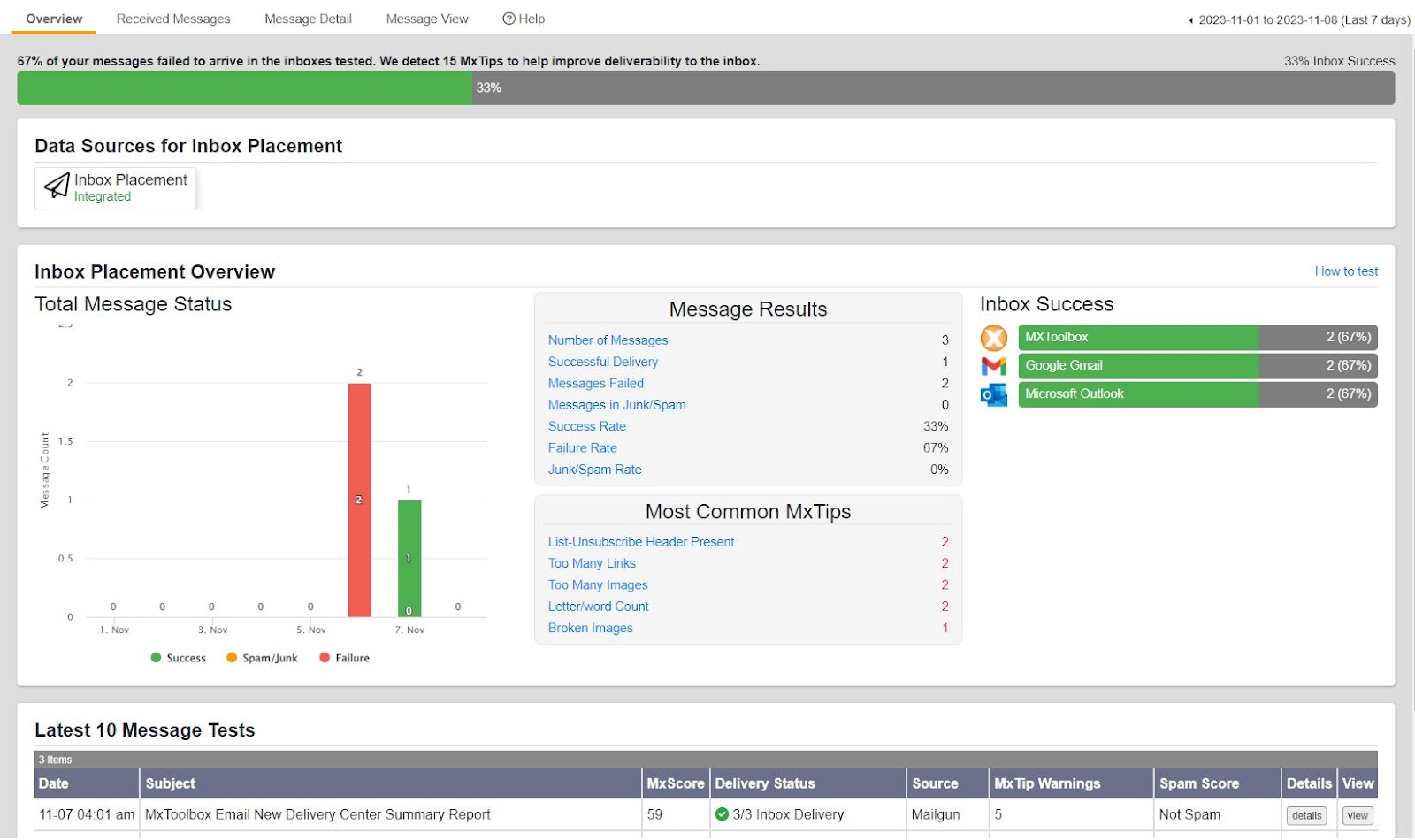
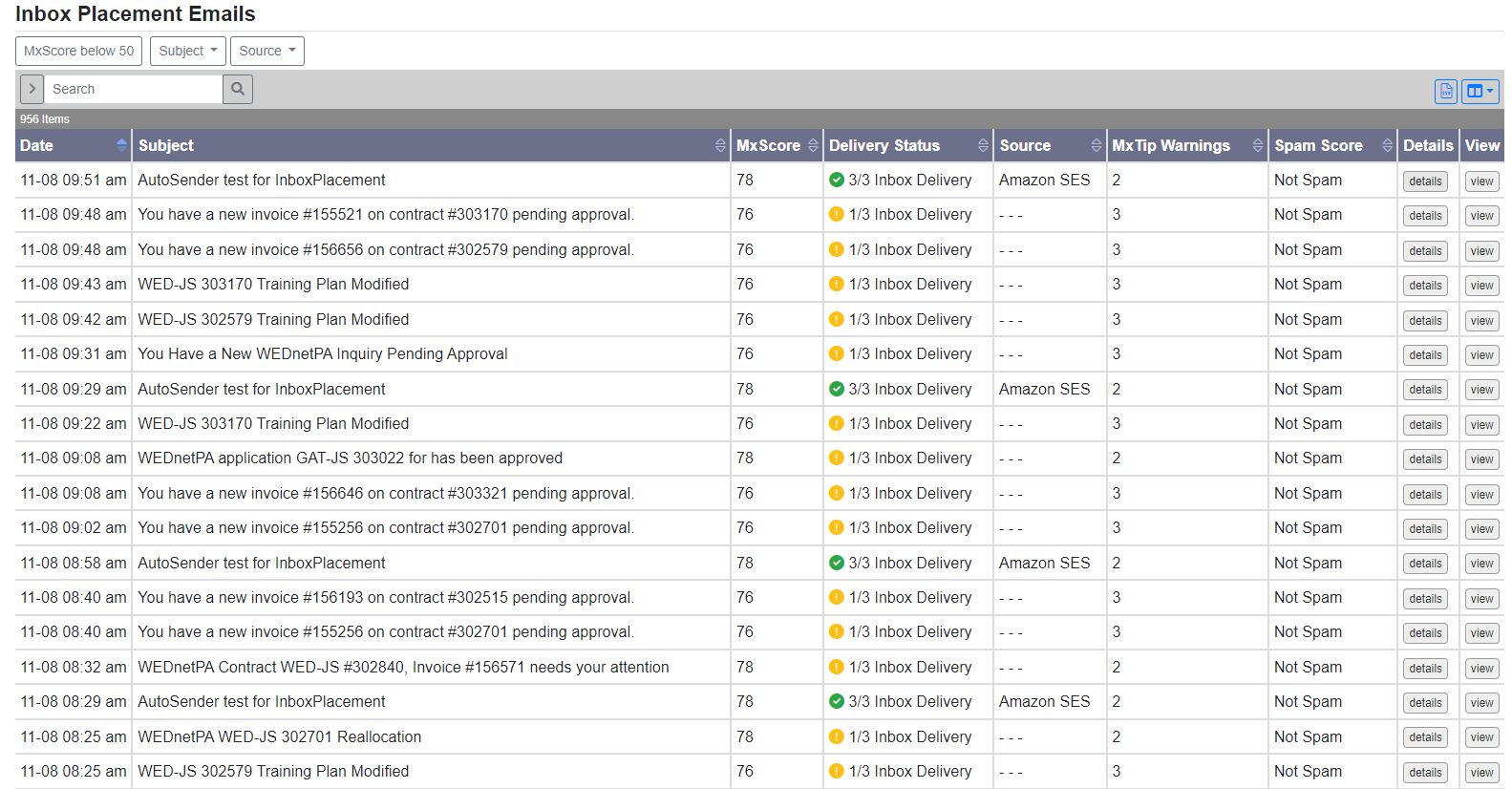
To maintain access to the Google Inbox, you need tools like MxToolbox Delivery Center. Our suite of email delivery tools helps your sending domain achieve the best possible email delivery rates, including issues with SPF, DKIM and DMARC. More importantly, our Inbox Placement feature will tell you if your campaigns are being sent to the Spam/Junk folders or actually making it to inboxes, as well as which Inbox Provider(s) you are having trouble sending to.
MxToolbox is the Expert on email delivery. We offer a wide range of email delivery services, including a fully managed email delivery service, so be proactive now and take advantage of them before these new 2024 guidelines are applied to your outgoing newsletters and marketing campaigns.